




 9810155689
 bdplus2001@yahoo.co.in
Posted By: Dr. Brahm Datt Pathak on 09 Aug 2026
When a patient is diagnosed with a hernia and surgery is recommended, one of the first questions is often: Should I have laparoscopic hernia surgery or open hernia surgery?
Both are established surgical approaches for hernia repair. The important point is that there is no single technique that is best for every patient.
The choice depends on the type and location of the hernia, whether it is a first-time or recurrent hernia, previous abdominal surgery, the patient’s general health and the surgeon’s assessment.
For patients considering laparoscopic hernia surgery in Faridabad, Dr. B. D. Pathak has a documented focus on laparoscopic and minimally invasive surgery. His official website lists both laparoscopic surgery and hernia operations among his services.
What Is Open Hernia Surgery?
Open hernia repair is performed through a surgical incision made over or near the hernia.
The surgeon accesses the affected area directly, returns the protruding tissue to its appropriate position and repairs the weakness in the abdominal wall. Depending on the type and circumstances of the hernia, mesh reinforcement may be used.
Open repair has been used successfully for many years and remains an important option for hernia treatment.
What Is Laparoscopic Hernia Surgery?
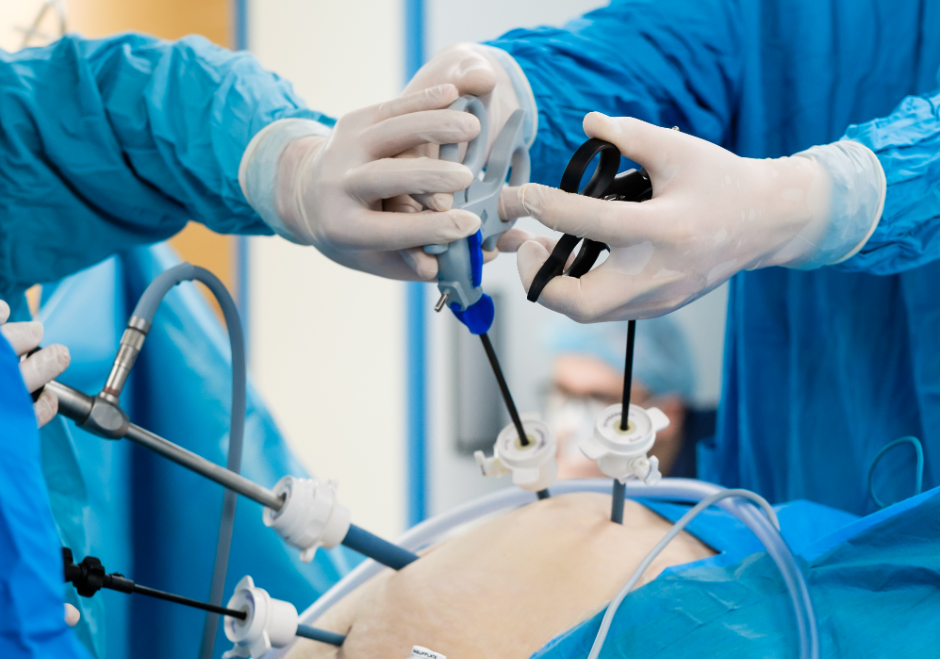
Laparoscopic hernia repair is a minimally invasive procedure performed through small incisions.
A camera provides a magnified view of the surgical area while specialised instruments are used to repair the hernia.
For appropriately selected patients, this approach can provide the benefits associated with minimally invasive surgery, such as smaller incisions and potentially a quicker return to routine activities.
However, laparoscopic surgery is not automatically the right option for every patient.
Laparoscopic vs Open Hernia Surgery: Key Differences
|
Feature |
Laparoscopic Hernia Surgery |
Open Hernia Surgery |
|
Incisions |
Usually several small incisions |
Usually one larger incision |
|
Surgical access |
Camera and specialised instruments |
Direct access through incision |
|
Scarring |
Generally smaller scars |
Usually a more noticeable incision |
|
Anaesthesia |
Usually requires general anaesthesia |
Depends on the procedure and patient |
|
Recovery |
May be faster for selected patients |
Recovery varies by procedure |
|
Bilateral hernia |
Can be useful in selected cases |
May require separate approaches |
|
Recurrent hernia |
May be considered depending on previous repair |
May also be appropriate |
|
Suitability |
Depends on patient and hernia characteristics |
Suitable for many types of hernia |
The actual surgical plan should always be decided after clinical evaluation.
Which Hernia Surgery Has Less Pain?
Pain after surgery varies significantly from one patient to another.
Laparoscopic surgery involves smaller incisions, which may mean less discomfort from the abdominal wall in some patients. However, laparoscopic procedures can cause other short-term symptoms, and individual experiences differ.
Open surgery can also be performed with modern pain-control methods.
Therefore, choosing surgery solely on the expectation of “no pain” is not appropriate.
Which Surgery Gives Faster Recovery?
For appropriately selected patients, laparoscopic repair can offer a relatively quicker recovery and earlier return to routine activities.
However, recovery depends on:
- Hernia size
- Hernia location
- Surgical technique
- Whether the hernia is recurrent
- Patient’s age and general health
- Type of work or physical activity
- Postoperative complications
A patient with a physically demanding job may have different recovery requirements from someone with a sedentary occupation.
Is Laparoscopic Surgery Always Better?
No.
This is an important point for patients researching laparoscopic hernia surgery in Faridabad.
Laparoscopic repair can be highly useful for selected hernias, but open surgery may be more appropriate in certain situations.
For example, factors such as:
- Very large hernia
- Complex abdominal anatomy
- Previous abdominal operations
- Certain recurrent hernias
- Patient medical conditions
- Availability of appropriate surgical access
can influence the decision.
The goal should be to choose the most appropriate procedure for the individual patient, not simply the newest technique.
When Is Laparoscopic Hernia Repair Commonly Considered?
A surgeon may consider laparoscopic repair in situations such as:
Bilateral Hernia
When hernias occur on both sides of the groin, a minimally invasive approach may allow both sides to be addressed during the same operation in appropriately selected patients.
Recurrent Hernia
The surgical approach for a recurrent hernia can depend on how the previous repair was performed and the patient’s individual anatomy.
Certain Inguinal Hernias
Laparoscopic techniques are commonly used for selected inguinal hernias.
The final decision should follow a physical examination and appropriate preoperative assessment.
How Is Laparoscopic Hernia Surgery Performed?
The patient receives the appropriate anaesthesia before the procedure.
Small incisions are made, and a camera is introduced to visualise the abdominal wall. Specialised instruments are used to place the hernia contents back into position and reinforce the weakened area.
A mesh may be used where appropriate to strengthen the repair.
The exact technique varies according to the type of hernia and surgical approach.
What Is Mesh and Why Is It Used?
A surgical mesh is a medical implant used in many hernia repairs to reinforce weakened tissue.
The purpose is to provide additional strength to the abdominal wall and reduce the likelihood of recurrence in appropriately selected cases.
Mesh is not required in every situation, and the decision depends on the type of hernia, repair technique and patient-specific considerations.
Patients should discuss the benefits and potential risks of mesh with their surgeon before surgery.
How Long Does Laparoscopic Hernia Surgery Take?
The operating time varies according to the type and complexity of the hernia.
A straightforward repair may be relatively short, while complex or recurrent hernias can require more time.
The surgeon can provide a more accurate estimate after evaluating the hernia.
What Should I Expect After Surgery?
After hernia surgery, patients may experience some discomfort, tiredness or swelling around the surgical area.
The surgeon will provide instructions regarding:
- Wound care
- Medication
- Walking and physical activity
- Diet
- Driving
- Work
- Heavy lifting
- Follow-up appointments
Walking is often encouraged as part of recovery, but strenuous activities should only be resumed according to medical advice.
When Can I Return to Work?
Return to work depends on the procedure and the type of work.
Someone with a desk-based occupation may return sooner than someone whose work involves heavy lifting or strenuous physical activity.
Patients should follow their surgeon’s individual instructions rather than comparing their recovery timeline with another person’s.
Are There Risks With Hernia Surgery?
As with any surgical procedure, hernia repair can involve risks.
Possible complications can include:
- Infection
- Bleeding
- Seroma or fluid collection
- Persistent pain
- Nerve-related symptoms
- Recurrence
- Anaesthesia-related complications
- Injury to nearby structures
Laparoscopic surgery also has specific risks associated with minimally invasive access.
A preoperative consultation allows these risks to be assessed in the context of the individual patient.
Laparoscopic Hernia Surgery in Faridabad
Dr. B. D. Pathak’s official profile identifies him as a senior surgeon specialising in GI, minimal access and bariatric surgery, with laparoscopic surgery and hernia operations among his listed areas of practice. Fortis Healthcare also lists laparoscopic surgery for hernia and other abdominal conditions among his surgical expertise.
This makes individual assessment particularly important for patients deciding between laparoscopic and open repair.
Frequently Asked Questions
Is laparoscopic hernia surgery safer than open surgery?
Both techniques are established surgical procedures. Safety depends on the patient’s condition, type of hernia, surgical technique, anaesthesia and the surgeon’s assessment.
Which has a smaller scar?
Laparoscopic surgery generally uses several small incisions, while open surgery uses a larger incision. However, scar appearance varies between individuals.
Is laparoscopic hernia surgery suitable for everyone?
No. The technique is selected based on the hernia and patient-specific factors.
Can I choose laparoscopic surgery myself?
Patients can discuss their preferred approach with their surgeon, but the final recommendation should be based on clinical suitability.
How soon can I exercise after hernia surgery?
The timeline depends on the type of repair and the patient’s recovery. Heavy lifting and strenuous exercise should be resumed only when the surgeon considers it appropriate.
Final Takeaway
The question should not simply be “laparoscopic or open?” It should be “Which approach is safest and most appropriate for my particular hernia?”
Laparoscopic hernia surgery can provide important advantages for selected patients, while open repair remains an effective option in many situations.
A detailed surgical consultation is the best way to understand the available options, expected recovery and potential risks.
Related search terms: laparoscopic hernia surgery in Faridabad, open hernia surgery, laparoscopic vs open hernia surgery, hernia surgeon in Faridabad, laparoscopic surgeon in Faridabad, hernia repair surgery, inguinal hernia surgery, minimally invasive hernia surgery, Dr B D Pathak laparoscopic surgeon.








 WhatsApp Us