




 9810155689
 bdplus2001@yahoo.co.in
Posted By: Dr. Brahm Datt Pathak on 15 Nov 2026
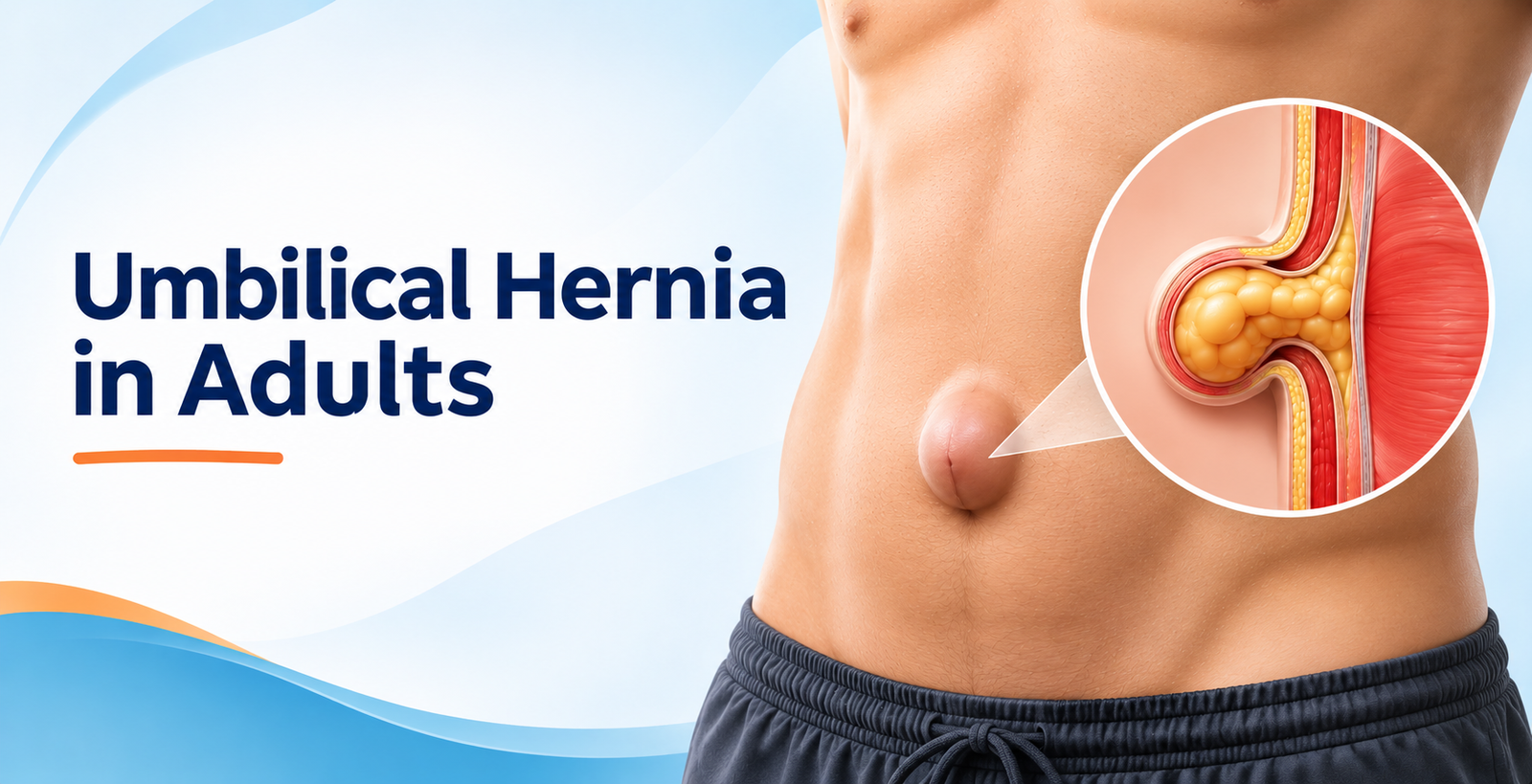
A small bulge around the belly button may seem harmless, especially when it does not cause pain. Many adults first notice it while coughing, lifting something heavy, exercising or looking in the mirror. The swelling may disappear when they lie down, only to become visible again when they stand.
This could be an umbilical hernia, a condition that develops when fatty tissue or part of the intestine pushes through a weak area in the abdominal wall near the navel.
Although an umbilical hernia may initially cause little discomfort, it should not be ignored. Some hernias gradually increase in size, while others become painful or develop complications that require urgent medical attention.
The encouraging news is that modern surgical techniques offer effective treatment options. Depending on the size of the hernia, symptoms and overall health, repair may be performed through open surgery or minimally invasive techniques.
For patients considering umbilical hernia treatment in Faridabad, understanding the condition can help them recognise warning signs and make informed decisions about treatment.
What Is an Umbilical Hernia?
An umbilical hernia occurs when tissue protrudes through an opening or weakened area in the abdominal wall near the belly button.
The abdominal wall consists of several layers, including muscles and connective tissue, which support the internal organs. The umbilical region is a naturally vulnerable area because it marks the site where the umbilical cord passed through the abdominal wall before birth.
In adults, increased pressure inside the abdomen may cause an existing weakness to widen, allowing tissue to bulge outward.
The hernia may contain fatty tissue, a portion of the omentum or, occasionally, part of the intestine.
An important distinction is that an adult umbilical hernia is different from an umbilical hernia in a child. Many childhood hernias close naturally, but adult hernias generally do not close on their own.
What Causes Umbilical Hernia in Adults?
An umbilical hernia usually develops because of a combination of abdominal wall weakness and increased pressure within the abdomen.
Several factors may contribute to its development.
- Obesity and excess abdominal weight
Excess body weight increases pressure on the abdominal wall. Over time, this may contribute to widening of a weak area around the umbilicus.
Obesity can also influence surgical planning because it may increase the risk of wound complications and hernia recurrence.
- Pregnancy and multiple pregnancies
During pregnancy, the abdominal wall stretches to accommodate the growing uterus.
This stretching, combined with increased intra-abdominal pressure, may contribute to umbilical hernia formation.
Women who have experienced multiple pregnancies may have an increased risk.
- Repeated heavy lifting
Heavy lifting can temporarily increase abdominal pressure, especially when accompanied by breath-holding or straining.
It may make an existing hernia more noticeable or symptomatic, although heavy lifting alone is not necessarily the underlying cause.
- Chronic constipation
Repeated straining during bowel movements increases pressure inside the abdomen.
Managing constipation is therefore useful for reducing discomfort and avoiding unnecessary strain.
- Persistent coughing
Chronic coughing caused by respiratory conditions or smoking may repeatedly increase abdominal pressure.
- Age-related tissue changes
As people age, abdominal muscles and connective tissues may lose some strength, increasing vulnerability to hernia formation.
- Fluid accumulation in the abdomen
Ascites, which is an abnormal accumulation of fluid within the abdominal cavity, can significantly increase abdominal pressure.
Patients with ascites may require additional medical assessment before hernia repair.
- Previous abdominal surgery
Surgery near the belly button can weaken abdominal tissues. A hernia developing through a previous surgical incision is generally classified as an incisional hernia rather than a primary umbilical hernia.
Early Signs and Symptoms of Umbilical Hernia
The most recognisable symptom is a swelling or bulge near the belly button.
However, symptoms vary considerably.
A visible bulge around the navel
The swelling may become more prominent while standing, coughing, laughing or straining.
In some cases, it becomes smaller or disappears when lying down.
Mild pain or discomfort
Some adults experience a dull ache or pulling sensation around the belly button, especially after physical activity.
Pressure or heaviness
Patients may describe a feeling of pressure in the central abdomen.
Increasing swelling
A hernia may gradually enlarge over time, although the rate of progression is unpredictable.
Tenderness
The area may become sensitive when touched or during activities that increase abdominal pressure.
Not every umbilical hernia causes pain. A painless swelling can still be a hernia and should be assessed if it is new, enlarging or concerning.
When Does an Umbilical Hernia Become Dangerous?
Most umbilical hernias are not immediate emergencies, but complications can occur.
Two important complications are incarceration and strangulation.
Incarcerated or irreducible hernia
An incarcerated hernia occurs when tissue becomes trapped and cannot easily return to the abdominal cavity.
This may cause persistent swelling and discomfort. Some incarcerated hernias require urgent surgical assessment.
Strangulated hernia
Strangulation occurs when the blood supply to trapped tissue becomes compromised.
This is a surgical emergency because the affected bowel or other tissue may become damaged.
Warning signs include:
- Sudden or rapidly worsening abdominal pain
- A painful, firm bulge that cannot be reduced
- Vomiting or persistent nausea
- Increasing abdominal swelling
- Skin redness or discolouration over the hernia
- Inability to pass stool or gas, particularly with abdominal pain and vomiting
If these symptoms occur, seek emergency medical care immediately.
Do not attempt to force a painful or discoloured hernia back into the abdomen.
How Is Umbilical Hernia Diagnosed?
In many cases, an umbilical hernia can be diagnosed through a clinical examination.
The surgeon examines the abdomen, checks the location and size of the swelling, and may ask the patient to cough or stand to assess how the bulge changes.
The evaluation may also include determining whether the hernia is reducible and whether there are signs of complications.
Ultrasound
An abdominal wall ultrasound may be recommended when the diagnosis is uncertain or when more information about the defect is needed.
CT scan
A CT scan may be useful for larger or complex hernias, suspected complications, recurrent hernias or when surgical planning requires detailed anatomical information.
Not every patient requires imaging.
Preoperative assessment
If surgery is planned, the surgeon may recommend blood tests and other investigations based on the patient’s age, medical history and anaesthetic risk.
Can an Umbilical Hernia Heal Without Surgery?
One of the most common questions patients ask is whether an umbilical hernia can disappear naturally.
In adults, the abdominal wall defect generally does not close without surgical repair.
Medicines, exercises and abdominal support belts cannot permanently repair the opening.
However, not every adult umbilical hernia requires immediate surgery.
For a very small, reducible hernia that causes no discomfort, watchful waiting may be appropriate after surgical assessment.
This involves monitoring the condition and reviewing symptoms over time.
The decision depends on hernia size, symptoms, overall health and the patient’s preferences.
Patients should understand the potential risks of delaying repair, including enlargement, pain and possible incarceration or strangulation.
When Is Umbilical Hernia Surgery Recommended?
Surgery is commonly considered when the hernia causes pain, affects everyday activities or gradually increases in size.
Other reasons include:
- Persistent discomfort during physical activity
- Difficulty performing work or exercise
- Recurrent episodes of tissue becoming trapped
- Significant enlargement
- Concern about future complications
- A hernia that cannot be reduced
- Emergency signs of bowel obstruction or strangulation
The timing of surgery should be individualised.
An uncomplicated hernia may be repaired electively, while suspected strangulation requires emergency treatment.
Modern Treatment Options for Umbilical Hernia
Surgery is the definitive method of repairing an adult umbilical hernia.
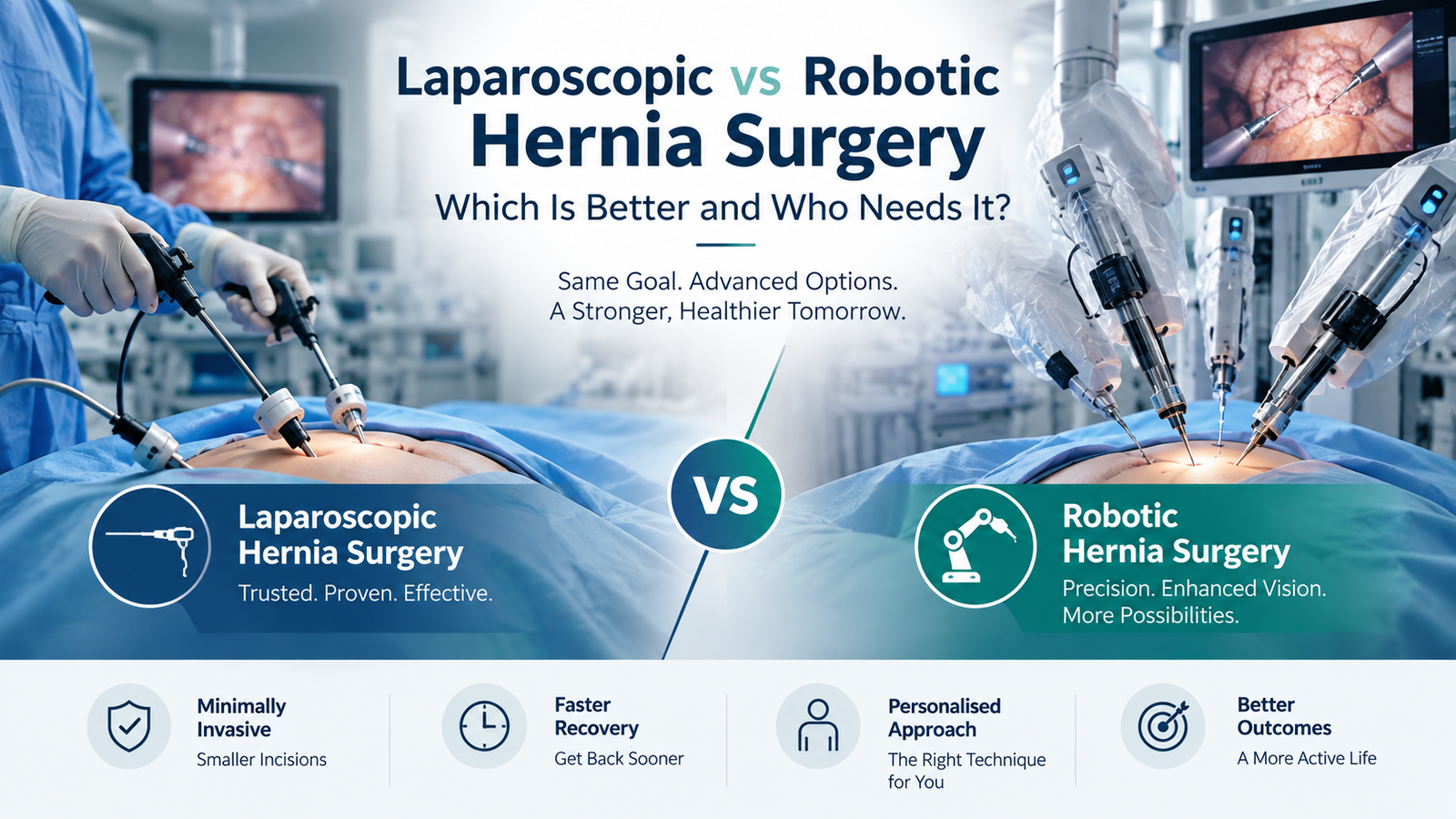
The main approaches include open repair, laparoscopic repair and, in selected centres, robotic-assisted repair.
The choice depends on the size and complexity of the defect, patient characteristics and the surgical team’s experience.
- Open Umbilical Hernia Repair
Open repair is a well-established procedure used for many small and medium-sized umbilical hernias.
During the operation, the surgeon makes an incision near the belly button.
The protruding tissue is carefully returned to the abdominal cavity, and the defect is repaired using sutures, surgical mesh or a combination of techniques.
Potential advantages of open repair
- Suitable for many uncomplicated hernias
- Can be performed through a relatively small incision
- May be possible under local anaesthesia with sedation in selected patients
- Often allows discharge on the same day
Open surgery remains an effective option and should not be considered outdated simply because minimally invasive techniques are available.
- Laparoscopic Umbilical Hernia Surgery
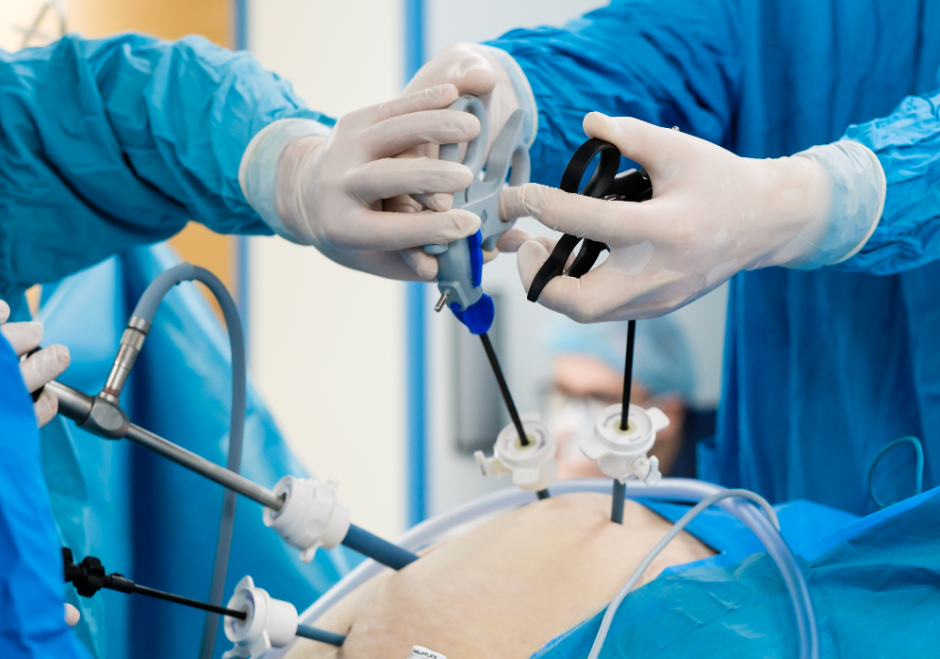
Laparoscopic surgery is a minimally invasive approach performed through several small abdominal incisions.
A camera and specialised surgical instruments allow the surgeon to examine the abdominal wall and repair the hernia.
Mesh may be used to reinforce the weakened area.
Laparoscopic repair may be particularly useful for larger defects or patients at increased risk of wound complications.
Potential advantages
- Smaller access incisions
- Reduced wound complications in selected patients
- Ability to inspect the abdominal wall internally
- A minimally invasive approach for appropriately selected cases
However, laparoscopic surgery is not necessarily better for every umbilical hernia.
Some small defects can be treated effectively with a straightforward open repair.
- Robotic-Assisted Hernia Repair
Robotic-assisted surgery is another minimally invasive technique available in selected surgical centres.
It allows the surgeon to control specialised instruments through a robotic system.
The technology may facilitate certain complex abdominal wall repairs, but it is not routinely required for uncomplicated umbilical hernias.
Evidence does not establish that robotic repair provides superior outcomes for every patient.
The most appropriate approach should be based on clinical needs rather than technology alone.
Umbilical Hernia Mesh Repair: Is Mesh Necessary?
Surgical mesh is a medical implant used to reinforce the weakened abdominal wall.
It provides additional support around the repaired defect.
One important concern after hernia surgery is recurrence, meaning the hernia develops again at the repaired site.
Clinical guidelines generally recommend mesh for many adult umbilical hernia repairs because it reduces recurrence compared with sutures alone.
However, for selected very small defects, particularly those measuring less than 1 cm, suture-only repair may be considered after discussion with the surgeon.
Is hernia mesh safe?
Mesh is widely used in abdominal wall surgery, but it is not completely free of risk.
Potential complications include infection, fluid collection, persistent discomfort and, rarely, mesh-related problems requiring further treatment.
The surgeon should explain why mesh is recommended, the proposed placement technique and the risks associated with the patient’s particular case.
Open Surgery vs Laparoscopic Surgery: Which Is Better?
Both approaches can provide effective repair.
|
Factor |
Open surgery |
Laparoscopic surgery |
|
Incisions |
Usually one near the hernia |
Several small incisions |
|
Suitable cases |
Many small and medium hernias |
Selected larger or complex hernias |
|
Anaesthesia |
Local or general, depending on case |
Usually general |
|
Mesh |
Often used |
Often used |
|
Recovery |
Depends on repair complexity |
Depends on repair complexity |
|
Wound complications |
May be higher in some patient groups |
May be lower in selected patients |
|
Long-term outcome |
Generally effective |
Generally effective |
The best approach depends on defect size, obesity, previous surgery, recurrence, anaesthetic risk and the surgeon’s assessment.
What Happens Before Umbilical Hernia Surgery?
Before surgery, the patient undergoes a clinical assessment.
The surgeon reviews the hernia, discusses the planned procedure and checks for medical conditions that may affect recovery.
Patients should inform the surgical team about diabetes, high blood pressure, heart or lung disease, previous operations and medications, particularly blood thinners.
Smoking cessation, weight management and appropriate diabetes control may reduce postoperative complications.
The anaesthesia team will provide instructions about fasting and medication use.
Patients should follow these instructions carefully rather than stopping prescribed medicines independently.
Recovery After Umbilical Hernia Surgery
Recovery varies according to the type of operation, the size of the hernia and the patient’s overall health.
Many patients undergoing uncomplicated repair can return home the same day.
Some discomfort, swelling or bruising around the surgical site is common during the early recovery period.
First few days
Patients are generally encouraged to begin gentle walking as advised by their surgical team.
Walking supports circulation and helps reduce complications associated with prolonged inactivity.
Returning to daily activities
Light activities may be resumed as comfort allows and according to the surgeon’s instructions.
People with desk-based jobs may return sooner than those whose work involves heavy physical exertion.
Heavy lifting and exercise
Restrictions depend on the repair technique and individual circumstances.
Patients should obtain specific guidance before resuming weightlifting, strenuous exercise or physically demanding work.
Wound care
The incision should be kept clean and cared for according to discharge instructions.
Increasing redness, discharge, fever or worsening pain should be reported to the surgical team.
Can an Umbilical Hernia Return After Surgery?
Yes. Although surgery is effective, recurrence remains possible.
Factors associated with recurrence may include obesity, smoking, diabetes, persistent abdominal pressure, wound complications and the repair technique.
Mesh reinforcement reduces recurrence risk in many adult umbilical hernia repairs, but it does not eliminate it.
Long-term risk reduction may involve maintaining a healthy weight, managing constipation, controlling chronic cough and following postoperative activity advice.
How to Reduce the Risk of Umbilical Hernia Complications
Not every hernia can be prevented, but certain measures may reduce avoidable strain and support abdominal health.
Maintaining a healthy body weight can reduce pressure on the abdominal wall.
Treating constipation and persistent coughing may also help limit repeated straining.
Patients who lift heavy objects should use appropriate techniques and avoid unnecessary breath-holding.
Anyone with a known hernia should seek reassessment if the swelling enlarges, becomes painful or stops reducing.
Exercises and abdominal binders may provide support in selected circumstances, but they do not close the defect.
Umbilical Hernia Treatment in Faridabad: Making an Informed Decision
Patients considering umbilical hernia surgery in Faridabad should seek a surgical consultation that includes an accurate diagnosis and a clear explanation of treatment choices.
The decision should not be based solely on whether laparoscopic or open surgery is available.
Important considerations include:
- The size and location of the abdominal wall defect
- Whether the hernia is symptomatic
- The possibility of complications
- The need for mesh reinforcement
- Existing medical conditions
- Expected recovery and activity restrictions
- The surgeon’s experience with the recommended technique
Dr. B. D. Pathak provides surgical consultation in Faridabad. Patients can discuss their symptoms, examination findings and appropriate management options, including whether surgical repair is necessary.
Frequently Asked Questions About Umbilical Hernia
- Is an umbilical hernia dangerous in adults?
Many umbilical hernias are uncomplicated. However, some can become incarcerated or strangulated, which may require emergency surgery.
- Can an umbilical hernia disappear without surgery?
Adult umbilical hernias generally do not close naturally. Surgery is the definitive repair, although watchful waiting may be suitable for selected asymptomatic patients.
- Is laparoscopic umbilical hernia surgery better than open surgery?
Not always. Both approaches are effective. Laparoscopy may offer advantages in selected larger hernias or patients at increased risk of wound complications.
- Is mesh always required for umbilical hernia surgery?
No. Mesh is commonly recommended to reduce recurrence, but suture repair may be considered for selected very small defects.
- How long does umbilical hernia surgery take?
The duration varies according to the defect size, surgical technique, previous operations and complexity. The surgeon can provide an estimate after assessment.
- Can I walk after umbilical hernia surgery?
Gentle walking is usually encouraged early after uncomplicated surgery, according to the treating team’s advice.
- Can an umbilical hernia affect digestion?
An uncomplicated hernia may not affect digestion. However, if bowel becomes trapped or obstructed, symptoms such as vomiting, abdominal distension and inability to pass stool or gas may occur.
- Can an umbilical hernia occur again after repair?
Yes. Recurrence is possible, although appropriate surgical repair and management of risk factors can reduce the likelihood.
- Should I undergo surgery if the hernia is painless?
Not necessarily. Small, reducible and asymptomatic hernias may be monitored after surgical assessment. The decision depends on individual risks and preferences.
- When should I consult a surgeon for an umbilical hernia in Faridabad?
Arrange a consultation if you notice a persistent or enlarging bulge around the belly button, discomfort during activity or changes in an existing hernia. Sudden severe pain, vomiting or a painful irreducible swelling requires emergency care.
Conclusion
An umbilical hernia in adults may begin as a small, painless swelling, but its behaviour can change over time.
Understanding the causes, recognising warning signs and obtaining an appropriate surgical assessment can help prevent avoidable complications.
Modern treatment includes open repair, laparoscopic surgery and mesh-based techniques, with the most suitable option depending on the patient’s condition.
For individuals exploring umbilical hernia treatment in Faridabad, timely evaluation can help determine whether monitoring or surgical repair is the right approach.







 WhatsApp Us