




 9810155689
 bdplus2001@yahoo.co.in
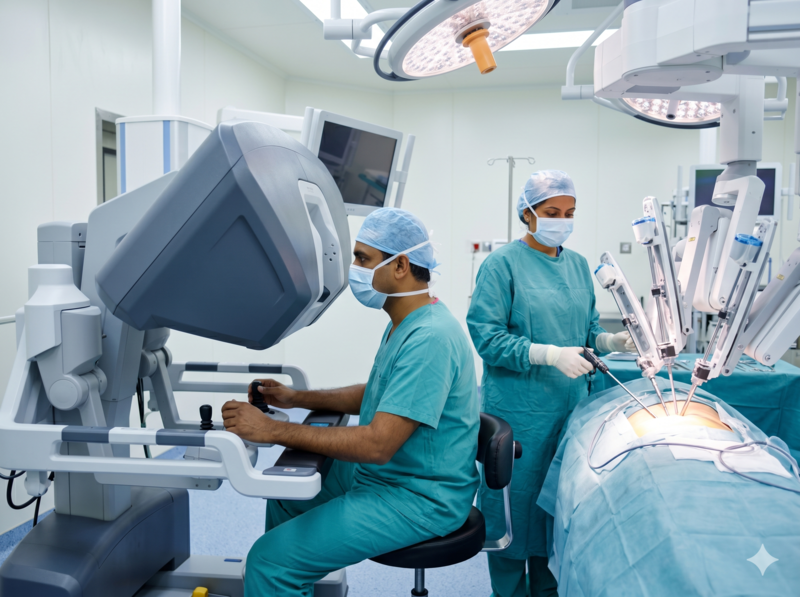
Robotic Surgery in General Surgery
Modern surgery has evolved significantly over the last decade, transforming the way complex procedures are performed. Robotic surgery represents one of the most advanced innovations in surgical care, offering unparalleled precision, enhanced visualization, and superior patient outcomes. Under the expert guidance of Dr. B. D. Pathak, patients can benefit from state-of-the-art robotic surgical procedures designed to minimize pain, reduce complications, and accelerate recovery.
Robotic-assisted surgery combines the expertise of an experienced surgeon with cutting-edge robotic technology, enabling highly precise movements and exceptional control during surgery. Contrary to common misconceptions, the robot does not perform the operation independently. Every movement is controlled by the surgeon, ensuring maximum safety and precision throughout the procedure.
For patients seeking advanced treatment for hernias, gallbladder diseases, gastrointestinal disorders, colorectal conditions, abdominal wall defects, and other complex surgical problems, robotic surgery offers a revolutionary alternative to conventional open surgery.
What is Robotic Surgery?
Robotic surgery is an advanced form of minimally invasive surgery where specialized robotic instruments are controlled by the surgeon from a sophisticated console. The robotic system provides:
- High-definition 3D visualization
- Magnified surgical view
- Enhanced dexterity and precision
- Tremor-free movements
- Better access to difficult anatomical areas
- Smaller incisions
- Reduced blood loss
This technology allows surgeons to perform highly complex procedures with exceptional accuracy while minimizing trauma to surrounding tissues.
Why Choose Robotic Surgery?
Traditional open surgeries often require large incisions, prolonged hospital stays, and extended recovery periods. Robotic surgery has transformed patient care by offering numerous advantages.
Enhanced Surgical Precision
The robotic platform allows extremely accurate movements that are beyond the natural range of the human hand.
Smaller Incisions
Tiny incisions reduce tissue trauma and improve cosmetic outcomes.
Less Pain
Patients generally experience significantly less post-operative discomfort.
Reduced Blood Loss
Robotic technology helps achieve meticulous dissection and precise control of blood vessels.
Lower Risk of Complications
Smaller wounds reduce the chances of infections and wound-related complications.
Faster Recovery
Most patients return to daily activities much sooner compared to traditional surgery.
Shorter Hospital Stay
Many robotic procedures allow discharge within one or two days.
Better Functional Outcomes
Preservation of nerves and vital structures can lead to improved long-term results.
How Does Robotic Surgery Work?
During robotic surgery, the surgeon sits at a specialized console and controls robotic arms equipped with miniature surgical instruments.
The system provides:
- Real-time 3D HD imaging
- 360-degree instrument movement
- Motion scaling technology
- Tremor elimination
- Improved access to difficult anatomical locations
Every movement made by the surgeon is translated into highly precise actions by the robotic instruments, ensuring optimal surgical control.
Conditions Treated with Robotic Surgery
Robotic surgery can be effectively used to treat a wide range of general surgical conditions.
Hernias
Hernias are among the most common conditions treated using robotic technology.
Robotic Hernia Repair is especially beneficial for:
- Inguinal Hernia
- Bilateral Inguinal Hernia
- Recurrent Hernia
- Ventral Hernia
- Incisional Hernia
- Umbilical Hernia
- Epigastric Hernia
- Complex Abdominal Wall Hernia
The robotic approach allows precise mesh placement, reduced post-operative pain, and lower recurrence rates.
Gallbladder Disorders
Robotic surgery is highly effective for gallbladder removal procedures.
Conditions Treated
- Gallstones
- Gallbladder Polyps
- Chronic Cholecystitis
- Acute Cholecystitis
- Biliary Dyskinesia
Robotic Cholecystectomy Benefits
- Minimal scarring
- Reduced pain
- Faster recovery
- Enhanced surgical precision
- Early return to work
Colorectal Surgery
Robotic colorectal surgery enables precise dissection in confined pelvic spaces and improves outcomes for patients with colorectal diseases.
Conditions Treated
- Colon Cancer
- Rectal Cancer
- Diverticular Disease
- Colorectal Polyps
- Inflammatory Bowel Disease
- Rectal Prolapse
Procedures Performed
- Robotic Colectomy
- Robotic Anterior Resection
- Robotic Low Anterior Resection
- Robotic Rectal Surgery
- Robotic Proctectomy
Gastrointestinal Surgery
Robotic systems have revolutionized gastrointestinal surgery by improving visualization and precision.
Conditions Treated
- Gastric Tumors
- Stomach Cancer
- Small Intestinal Disorders
- Gastrointestinal Stromal Tumors (GIST)
- Benign GI Masses
Procedures
- Robotic Gastrectomy
- Robotic GI Tumor Removal
- Robotic Small Bowel Surgery
Bariatric and Metabolic Surgery
Robotic surgery offers superior control during weight-loss procedures.
Conditions
- Morbid Obesity
- Metabolic Syndrome
- Obesity-Related Diabetes
Procedures
- Robotic Sleeve Gastrectomy
- Robotic Gastric Bypass Surgery
- Revisional Bariatric Surgery
Benefits include greater precision, lower complication rates, and improved surgical outcomes.
Appendix Surgery
Robotic appendectomy offers an advanced approach for patients with appendicitis.
Advantages
- Less pain
- Faster discharge
- Better cosmetic outcomes
- Reduced infection risk
Abdominal Wall Reconstruction
Patients with complex abdominal wall defects often require highly specialized surgical repair.
Conditions
- Large Ventral Hernias
- Recurrent Hernias
- Abdominal Wall Defects
Robotic Procedures
- Component Separation Techniques
- Complex Hernia Reconstruction
- Mesh Reconstruction Surgery
Splenic Surgery
Robotic surgery can be used for selected splenic disorders requiring surgical intervention.
Procedures
- Robotic Splenectomy
- Partial Splenic Surgery
Adrenal Surgery
Robotic adrenalectomy has become a preferred option for many adrenal gland conditions.
Conditions
- Adrenal Tumors
- Functional Adrenal Masses
- Benign Adrenal Lesions
Gastroesophageal Reflux Disease (GERD) Surgery
For patients suffering from severe acid reflux, robotic surgery offers excellent outcomes.
Procedures
- Robotic Fundoplication
- Hiatal Hernia Repair
- Anti-Reflux Surgery
Why Robotic Surgery is Better Than Conventional Surgery
| Feature | Open Surgery | Laparoscopic Surgery | Robotic Surgery |
|---|---|---|---|
| Incision Size | Large | Small | Very Small |
| Blood Loss | Higher | Less | Minimal |
| Pain | More | Less | Least |
| Hospital Stay | Longer | Shorter | Shortest |
| Recovery Time | Longer | Faster | Fastest |
| Surgical Precision | Limited | Good | Excellent |
| Cosmetic Results | Moderate | Good | Excellent |
Robotic surgery combines the benefits of minimally invasive surgery with unmatched precision and surgical control.
Who is a Candidate for Robotic Surgery?
You may be an ideal candidate if you have:
- Hernia
- Gallstones
- Colon disorders
- Rectal diseases
- GI tumors
- Morbid obesity
- GERD
- Abdominal wall defects
- Recurrent surgical conditions
A detailed evaluation helps determine whether robotic surgery is the most suitable treatment option.
What to Expect Before Surgery
Before robotic surgery, patients undergo a comprehensive assessment that may include:
- Medical examination
- Blood investigations
- Imaging studies
- Cardiac evaluation
- Anesthesia assessment
Dr. B. D. Pathak develops a personalized treatment plan tailored to the patient’s condition and overall health.
Recovery After Robotic Surgery
One of the biggest advantages of robotic surgery is faster recovery.
Patients typically experience:
- Less post-operative pain
- Earlier mobilization
- Reduced need for pain medications
- Faster return to work
- Improved quality of life
Recovery timelines vary depending on the procedure, but most patients resume normal activities much sooner than after traditional open surgery.
Why Choose Dr. B. D. Pathak for Robotic Surgery?
Dr. B. D. Pathak is known for delivering advanced surgical care with a patient-centric approach. His expertise in minimally invasive and robotic-assisted procedures enables patients to receive world-class treatment with maximum safety and excellent outcomes.
What Sets Dr. B. D. Pathak Apart?
- Expertise in Advanced Robotic Surgery
- Extensive Experience in Complex General Surgical Procedures
- Personalized Treatment Plans
- Focus on Organ Preservation and Precision Surgery
- Faster Recovery Protocols
- Comprehensive Pre- and Post-Operative Care
- Evidence-Based Surgical Approach
- Commitment to Patient Safety and Clinical Excellence
Every patient receives individualized care designed to achieve the best possible surgical outcome while minimizing discomfort and downtime.
The Future of General Surgery is Robotic
The field of surgery is moving rapidly toward precision-based, minimally invasive approaches. Robotic surgery represents the next generation of surgical excellence, offering patients safer procedures, enhanced recovery, and superior outcomes.
Whether you require hernia repair, gallbladder surgery, colorectal surgery, gastrointestinal surgery, bariatric surgery, or complex abdominal wall reconstruction, robotic-assisted surgery can provide a highly effective treatment solution with less pain and faster recovery.
Under the expert care of Dr. B. D. Pathak, patients gain access to advanced robotic surgical technology backed by clinical expertise, precision, and compassionate care.














 WhatsApp Us